
John Affriol, PE, Project Manager at C.S. Davidson, has been overseeing the conversion of the former rail and trolley line into a hiking and biking trail, plus the restoration of surrounding wetlands.
On a warm afternoon in Heidelberg Township, bikers, hikers, and joggers enjoy the newest stretch of the Hanover Trolley Trail. The asphalt path follows the serpentine course of the strategically redirected Oil Creek.
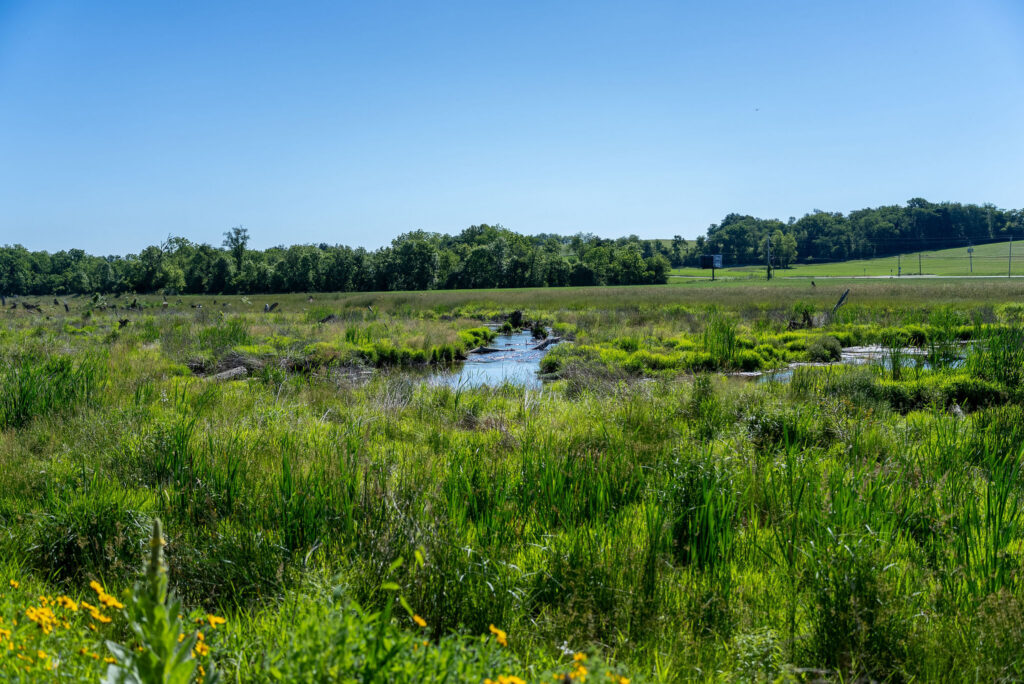
Frogs croak from the edge of the meandering stream. Turtles sun themselves on decaying logs. Red-winged blackbirds, blue herons, goldfinches, and even a bald eagle fly through new native wetland plantings.
John Affriol, PE, Project Manager at C.S. Davidson, points out each natural highlight and historical element of the restored wetlands and accessible trail. Working on this project for the last few years has been a highlight of his time at the civil engineering firm.
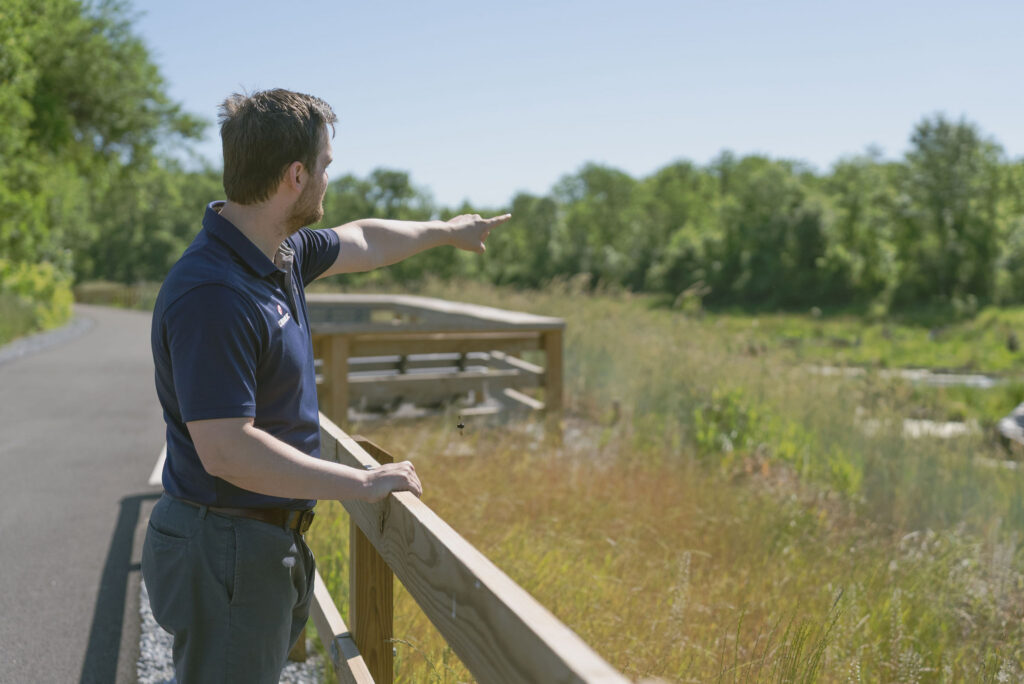
“The uniqueness of this project is the trail with the floodplain restoration and leaving the original right- of-way to follow the old floodplain,” he says. “This idea of a multi-use green way and a blue way is, I think, where we may see a lot of rail trails going in the future.”
Tying together history and habitat
The naturally beautiful Hanover Trolley Trail has deep roots in York County’s transportation history. The original York and Hanover trolley line opened in 1908, connecting Hanover, Spring Grove, and rural communities between York and Hanover.
John began managing sections of the Hanover Trolley Trail project in 2023. The work has included trail design, construction management, permits coordination, and collaboration with stream-restoration specialists. In November 2025, the team completed the floodplain restoration and trail extension, which extended the trail from Hanover as far as Jacobs Mill Road.
The restoration work on Oil Creek was central to creating a trail that could last for a century. Over time, Oil Creek had been rerouted to run alongside the old railroad corridor. The result was a deeply entrenched streambed that, during heavy rainfall, created swift-moving water that contributed to erosion. In some areas, the old railbed had been washed out, leaving the steel rails suspended.
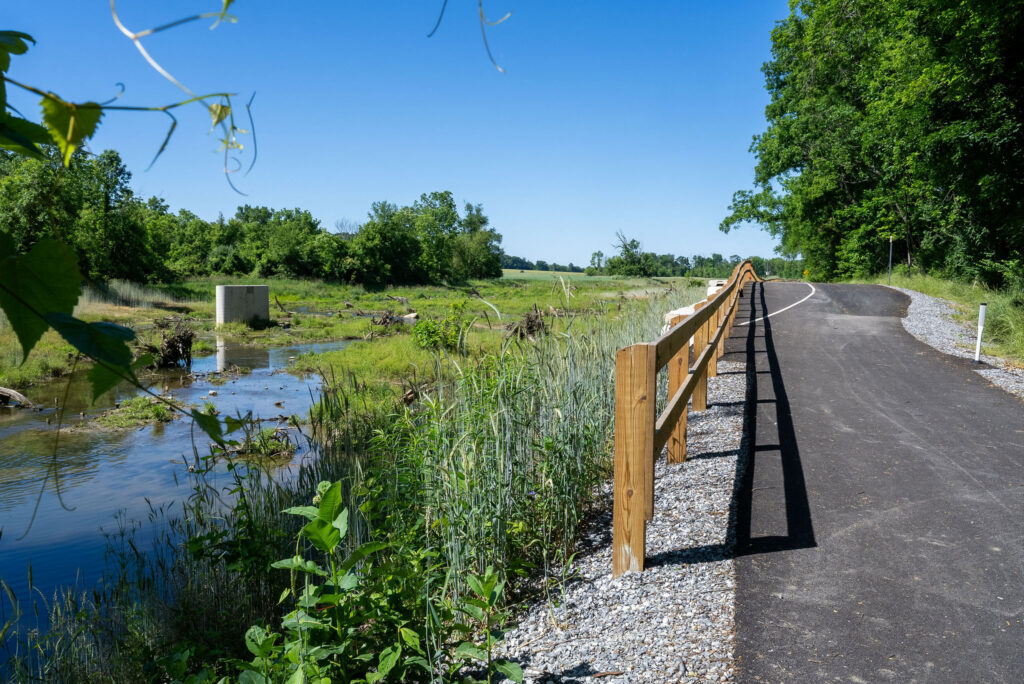
The design team rerouted the creek back to a more natural winding course through a wide, flora-filled floodplain. It then shifted the original railway route to follow the natural shape of the floodplain. The result is a gently curving trail through broad wetlands and a creek that can widen and flow more slowly during storms, lessening erosion.
The restored floodplain is alive with native trees, shrubs, and wetland vegetation taking root in the fertile soil. Stumps from trees cleared during restoration were placed back on the floodplain, where they continue to create a wildlife habitat and slow water flow.
Engineering through the unexpected
The result is a trail experience that gives users a close look at thriving wetlands. C.S. Davidson designed viewing areas where trail users can step aside, sit on a bench, and take in the landscape.
“Not only do you get to exercise, you get the enhanced experience of this beautiful floodplain with all of the wildlife,” John says.
Within the floodplain, the trail was paved to reduce the risk of washout during times of high water. Outside the floodplain, C.S. Davidson put down a gritty mixed surface on the trail, which most users prefer. The firm gravel surface is easier on joints and safer for horses using the trail.
In one rerouted section, crews encountered soft soils that could not support construction equipment. C.S. Davidson brought in a geotechnical engineer, and the team used soil-cement to stabilize the area, keeping the project moving. In another area, construction crews uncovered a natural spring. John designed a method to direct the water under the trail, protecting its surface and the spring’s natural flow.
A focus on relationships and meaningful community projects
The trail project has been in the works since 2008. In 2026, its next major phase will add a pedestrian bridge over Oil Creek and a parking area near the restored wetlands. Work for these additions will start in July 2026. The steel truss bridge will be 300 feet long and 8 feet wide.
“When that bridge goes in, it’ll tie this whole thing together,” John says.
Projects such as the Hanover Trolley Trail take years of planning, coordination, funding, permitting, design, and construction. They also require trust among engineers, municipal authorities, landowners, contractors, and the public. That type of work is a specialty of the C.S. Davidson team.
“One of the great things about working at C.S. Davidson is working on meaningful projects to the community,” John says. “We’re not a project-focused company where we just try to go to the next project. We’re a client-focused company where we build these long-lasting relationships.”