
The three York College alumni are driving the evolution of the CSDatum program, bringing fresh ideas to the municipal assets-tracking platform.
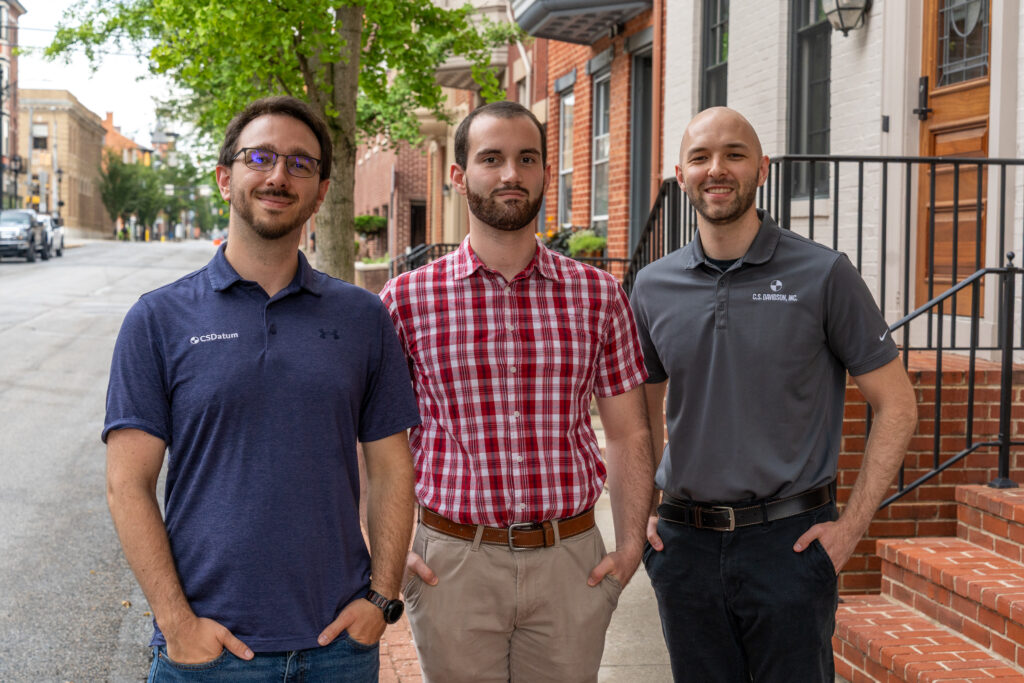
Software Design Engineers Michael Marsh, Kyle Jones, and Ryan Curry began their careers in a similar fashion at C.S. Davidson after internships with the firm offered by York College of Pennsylvania’s Computer Science program. Each student gained real-world experience working on CSDatum, C.S. Davidson’s proprietary software focused on asset management and permit management for Pennsylvania municipalities.
The three graduates are now shaping the future of the platform on which they were once trained by CSDatum co-creators John Petro, Senior Software Engineer, and Jordan Good, Chief Administrative Officer.
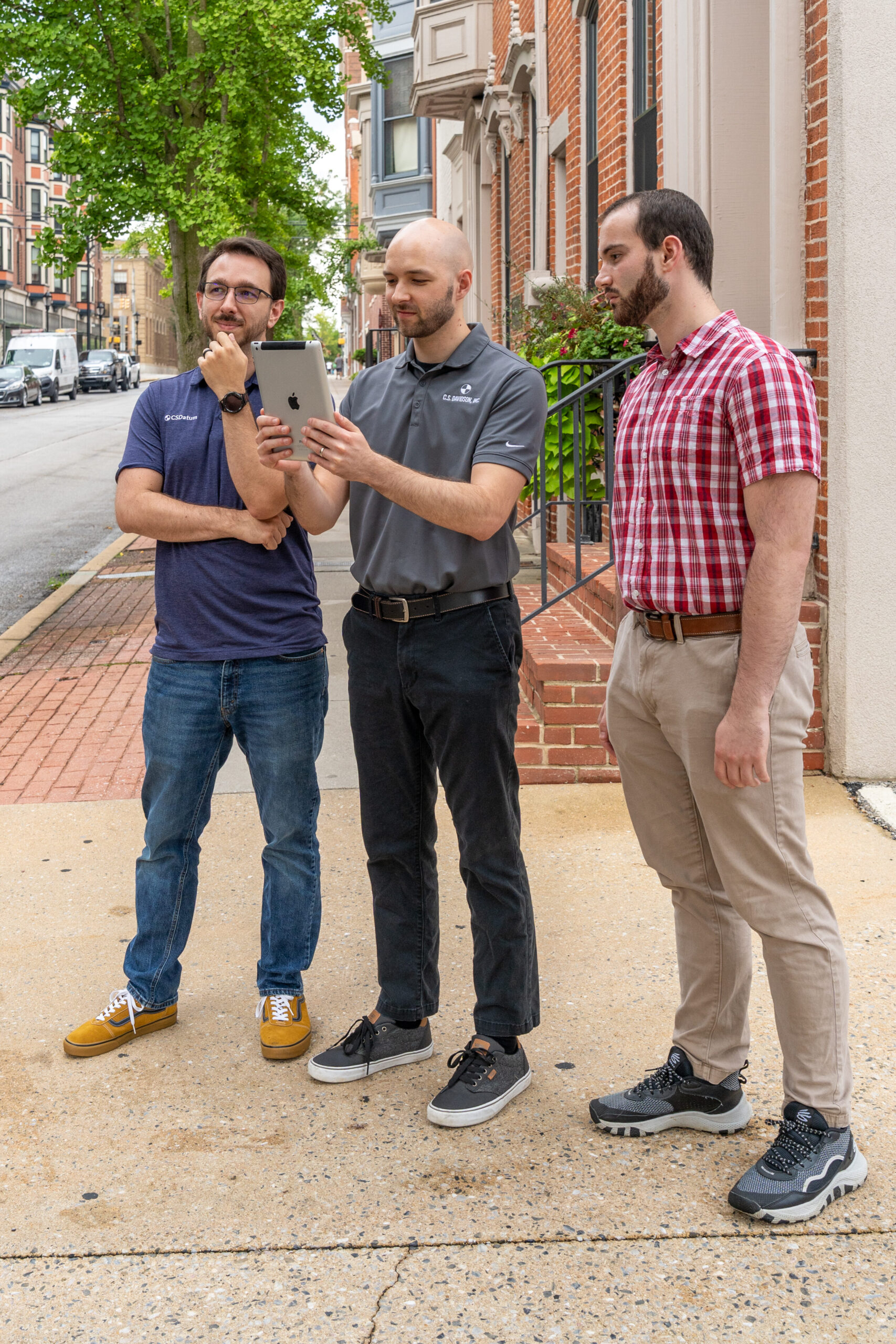
A decade after Mike became C.S. Davidson’s first full-time hire dedicated to CSDatum, the three alumni and John formed the core of the software design engineering team, led by Client Manager Jonathan Heilman. Together, they expand and refine CSDatum, which helps municipalities manage infrastructure assets, permits, and records across Pennsylvania.
York College roots
The three software design engineers trace their skills back to the hands-on education they received at York College.
“The biggest thing that really prepared me was the senior project,” says Mike, who graduated in 2015. “It has a much better vibe of what real-world work is like, where all you have in front of you is the problem and you need to figure out the solution.”
Kyle, who graduated in 2019, agrees, noting that York College faculty connections helped open doors for him.
“My professor at the time, Professor (Donald J.) Hake, told me about C.S. Davidson’s opening. I just figured I’d try it out and realized I enjoyed software engineering so much more than IT,” he says. “That was a good push for me.”
For Ryan, a 2025 graduate, the senior project simulated on-the-job collaboration. He also participated in a year-long internship at C.S. Davidson as he completed work on his degree.
“We had milestone presentations, and the professors acted as clients. It simulated a real-world scenario as closely as possible,” he says.
Improvements and expansions
CSDatum has grown significantly since its early days. A major development was the acquisition and modernization of Permit Manager, a decades-old software package that came with a bank of municipal clients.
With the purchase of Permit Manager and the onboarding of dozens of clients and hundreds of thousands of documents, the database began to work less efficiently. Because of that growth, the software design team faced the challenge of streamlining performance and increasing speed. This has involved rebuilding the software from a Microsoft Access-based database to a web format and carefully crafting its inner workings for operating at scale. They continually tweak the software for speed and efficiency so that the user’s experience is always improving. A recent change to the code for document previews has dramatically sped up workflows for C.S. Davidson’s municipal clients by utilizing a light-weight tool that builds and displays PDF previews directly in Permit Manager.
“It’s more efficient, there’s less load on the server, and it loads previews very quickly,” Ryan says.
Another major step forward has been the addition of Intercom, a chat feature in the platform. While many firms first direct clients to an artificial intelligence chatbot, C.S. Davidson’s chat feature sends a client’s message straight to an engineer on the team.
“It completely changed the support we can give,” Kyle says.
Serving municipalities first
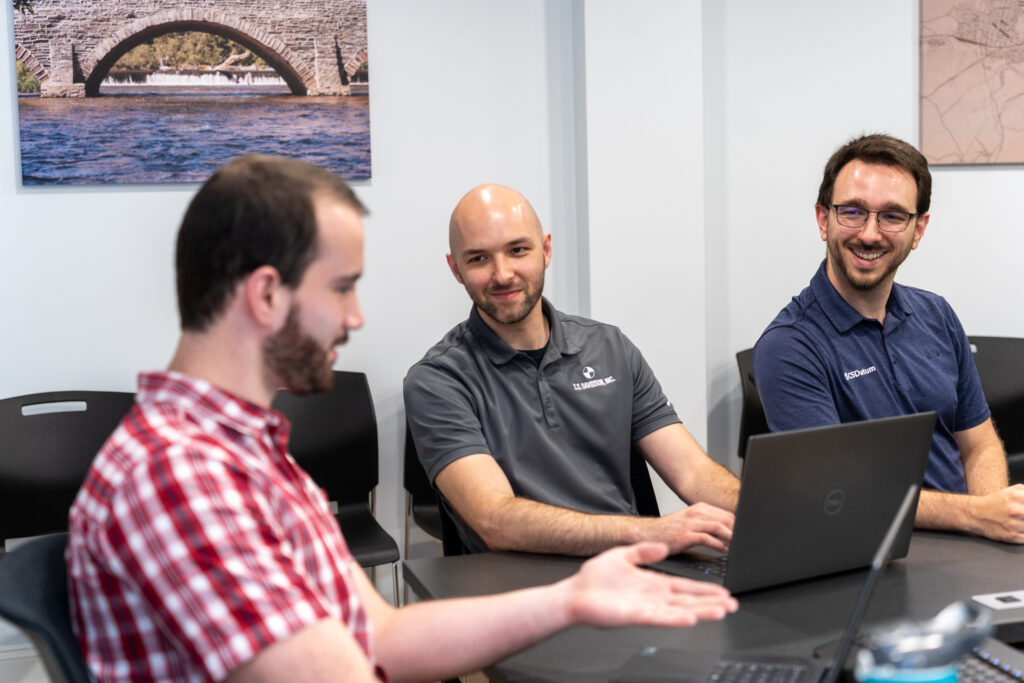
While CSDatum serves a growing list of municipalities and institutions, the software team intentionally keeps its operation small and collaborative.
“We never want someone contacting us and getting automated responses that give terrible advice,” Mike says. “We want real people keeping it personal.”
A hybrid team structure allows flexibility while maintaining strong collaboration through proposal, review, and development cycles.
“Everyone knows what the other is working on,” Kyle says. “The size now just feels perfect.”
The engineers see opportunities to continue modernizing the interface and exploring AI-powered tools, but they remain committed to their core mission of serving small—to medium-sized municipalities while keeping their dealings personal and hands-on.
It’s a value system the team is committed to keeping, even as the firm’s client base grows. For the three York College alumni, CSDatum is about building tools that help communities work smarter and more efficiently while establishing meaningful connections.