
A thoughtfully engineered partnership turned a critical-access challenge into a lasting investment in education and the environment.
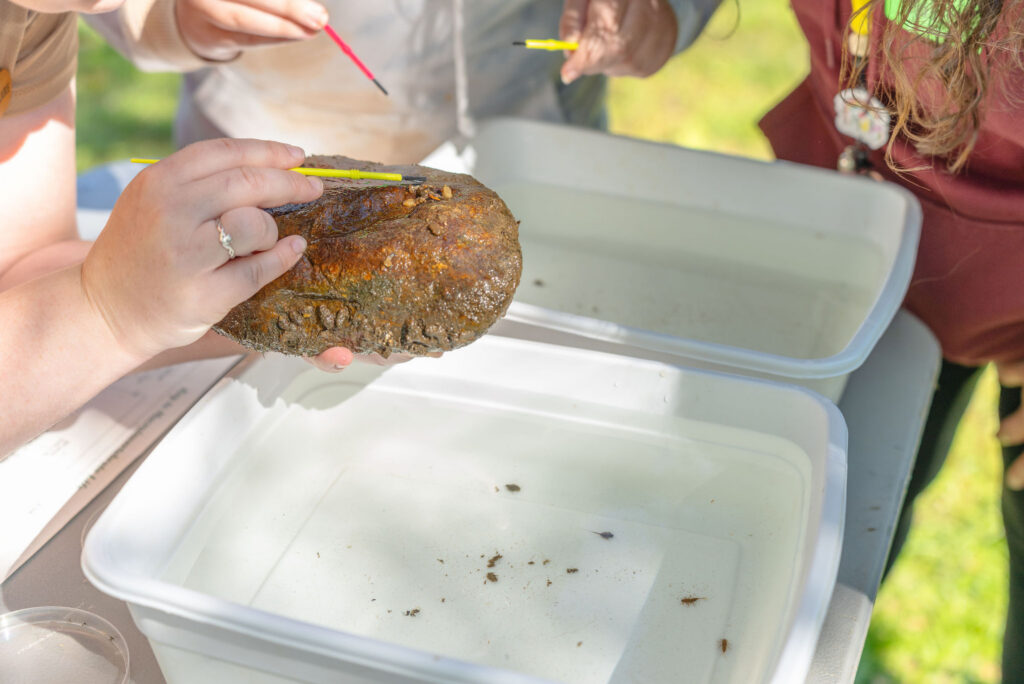
Sixth-graders pull on wading boots, clutch mini-nets, and step carefully into a babbling stream. Water ripples around them as they sweep their nets through the current, searching for macroinvertebrates, tiny indicators of a healthy ecosystem.
With their catches in hand, they slosh back to the bank, dump the contents of their nets into a water-filled tray, and look at the minuscule creatures up close. It’s the kind of immersive environmental education that defines Buttonwood Nature Center.
Thanks to a new C.S. Davidson-engineered bridge spanning the stream, getting here is easier and safer than ever before.
A bridge born of necessity
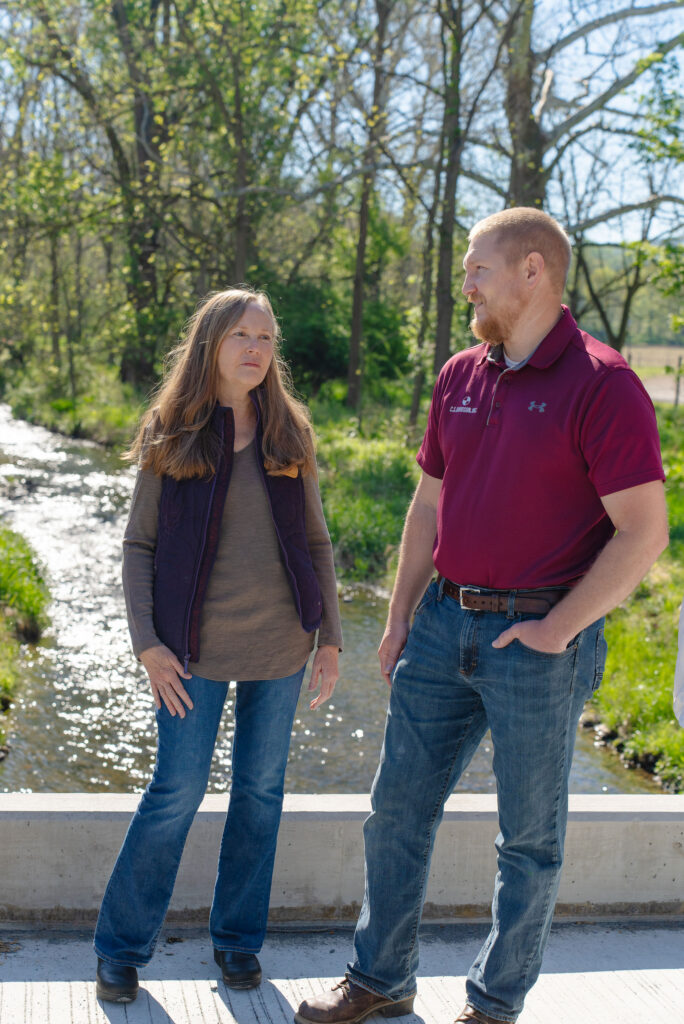
Since 1990, the Institute, as Buttonwood Nature Center was known before 2024, connected students to the natural world from its headquarters at Renfrew Museum and Park in Waynesboro, Pennsylvania. In 2020, the organization faced an unexpected challenge. It was suddenly forced to leave its home base and relocate, rebuild, and reimagine the future of its program.
The organization, renamed Buttonwood Nature Center in early 2024, found a nearly 40- acre property in Washington Township, outside Waynesboro, with woods, wetlands, and a meandering stream that fed a sprawling pond. It was the perfect location.
“Having seen this property, we recognized it was uniquely suited to help fulfill our mission,” Buttonwood Executive Director Tracy Holliday says.
There was one critical problem. The property came with a conditional-use order that required the organization to install a bridge across the stream. Without it, school buses would not be able to access the property, hampering educational programs.
“This was going to be a necessity,” Tracy says.
An existing narrow farm bridge sat just above the water level and had no side rails. When neighboring farmers drove over it, the wheels of their largest harvesting equipment hung just over the edge. Although the farmers deftly navigated the bridge built by their ancestors, it was not deemed safe for school buses.
“We completed an extensive due diligence investigation and gathered our courage. We gathered input from the community. We then launched a $3 million campaign, which, thanks to an appreciative and generous community, is now fulfilled by gifts and future pledges,” Tracy says. “The bridge is paid for. The property is paid for. The fundraising continues because we have much additional infrastructure work to complete.”
Understanding the vision
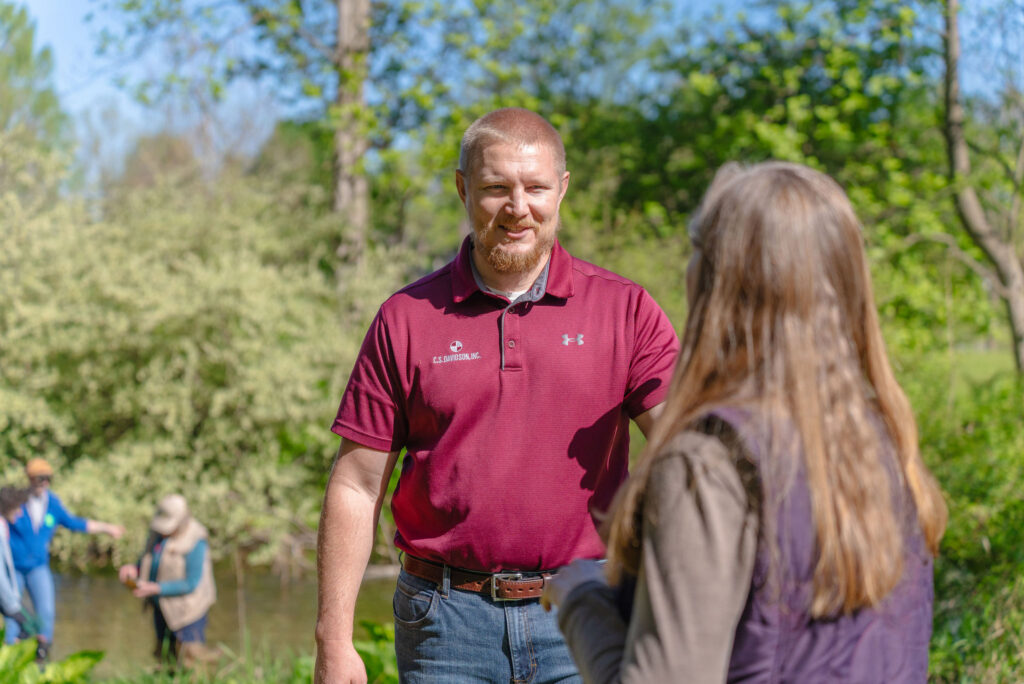
Buttonwood connected with C.S. Davidson and Bridge Engineer Logan Swartz, PE, to ensure that the project would meet its immediate needs and long-term vision.
“Our involvement began by doing original preliminary designs for a couple of different alignment options, trying to understand what the vision was for what this needs to be,” Logan says.
Executive Director
The bridge needed to support school buses and heavy construction vehicles, maintain access for neighboring farms, and comply with environmental regulations for a wild trout stream. The goal was to preserve as much of the natural landscape as possible while the bridge served as part of a shared access route, requiring close coordination with farmers and other residents.
“There was a lot of coordination. There were many conversations as we were designing the project to determine what was needed. Because if you’re going to build a $1 million bridge, you should only build it once,” says Buttonwood board member and Facilities Committee Chair Bill Hofmann.
Engineering with context in mind
Designing the bridge meant balancing technical requirements with environmental and community sensitivities. The old span, with multiple piers in the stream, contributed to flooding and debris buildup. The new design eliminated in-stream obstructions, improving water flow and reducing environmental impact.
Additionally, the bridge needed to accommodate not only the flow of the primary stream but that of two tributaries that enter the waterway at the site of the new bridge.
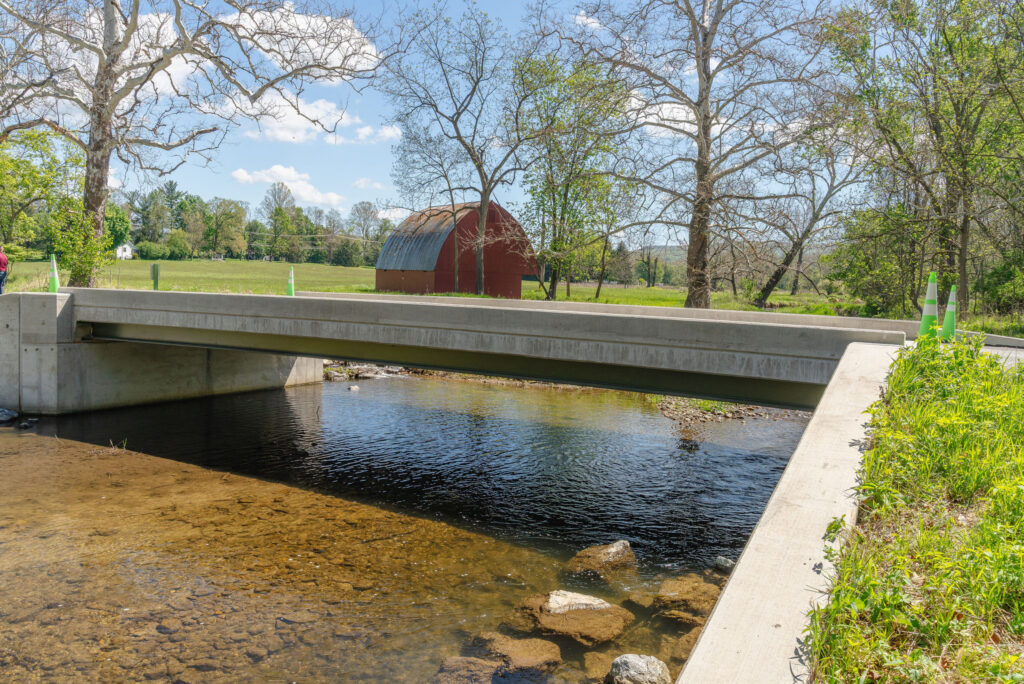
“The idea here was to open up the channel to allow natural flow underneath the bridge structure,” Logan says.
He designed the bridge with a higher elevation to prevent overtopping during storms and widened access to accommodate large vehicles that needed to make tight turns onto and off the bridge. The new low-profile bridge preserves views of the stream and has traction grooving and curbing for safety. There is no traditional railing, allowing agricultural vehicles with extended arms easy passage.
Navigating complexity through partnership
Beyond engineering, the project required a high degree of coordination, especially during construction. Maintaining access for residents, farmers, and staff meant building a temporary causeway using pipes leased from Washington Township. C.S. Davidson helped with scheduling closures and maintaining communication with all stakeholders.
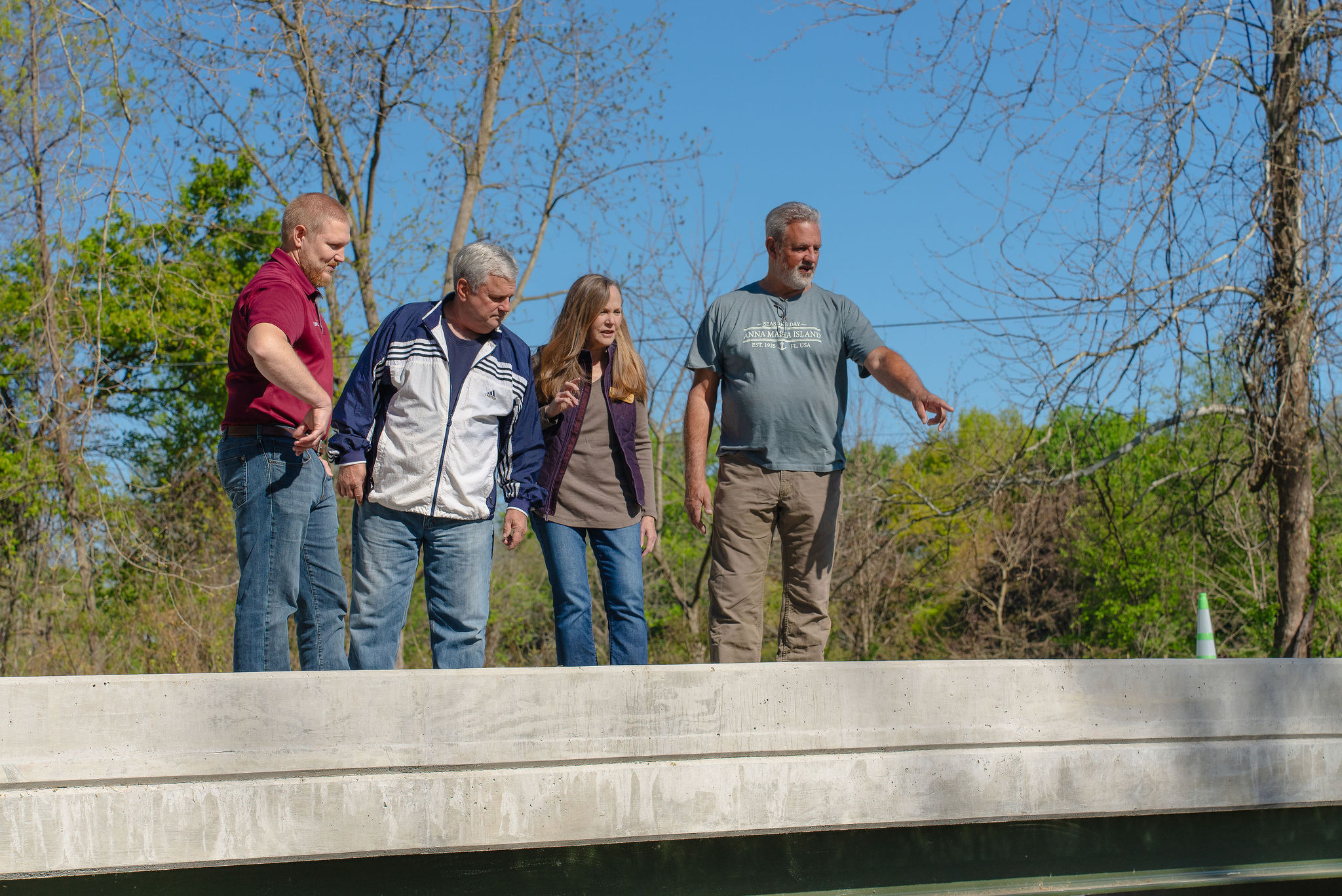
Weather events, strict construction timelines, and material delays added further complexity to the project. With a firm Oct. 1, 2024, environmental deadline to exit the stream channel before fall trout spawning, every decision mattered.
“It was pretty tight choreography,” Bill says.
Through it all, the project partners Buttonwood, C.S. Davidson, and other contractors worked collaboratively to solve the challenges.
“There was a real teamwork atmosphere,” Logan says.
The bridge officially opened to traffic on Oct. 1, 2024, marking a major milestone for Buttonwood Nature Center. For the first time, school buses could cross onto the property, eliminating the need for students to walk in from the road and allowing the organization to expand its on-site programming.